Most of us western Christians grew up looking at images of the crucifixion that show Jesus being pierced with one nail over both feet, as in the picture at right. Sometimes we see images
which have both feet nailed separately (making a total of four nails), but the three nails version is, for most of the time, definitive. There are people who would even say that this portrayal is "
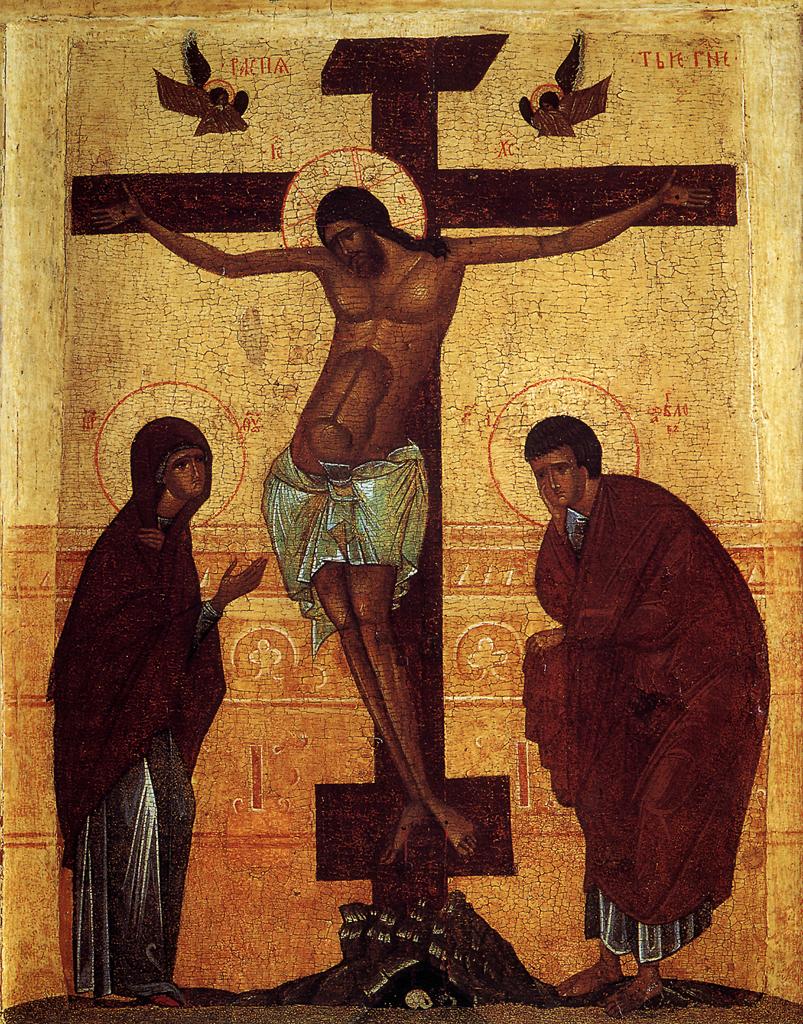
traditional", sometimes almost giving the impression that the four-nails version were somehow a novel variation. We must note, however, that depicting only three nails is purely a medieval (this iconographic convention only started around the end of the 1st millenium), Western thing; Eastern icons,
with a few Western-influenced exceptions,
uniformly portray four nails being used to pin Jesus down to His cross. And here they are following a more ancient iconographic tradition which could have some basis in historical reality.
The oldest depiction of a crucifixion we have, the
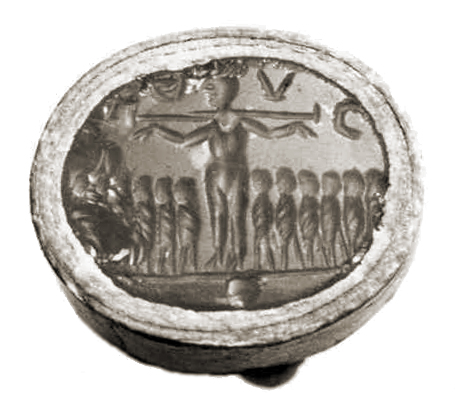
Alexamenos Graffito (dating from the late 1st-3rd century AD), clearly shows the crucified figure's feet as being separate. Other early images, such as a late 2nd-3rd century
carved jasper either from Syria or Gaza (part of the Pereire Collection),
a graffito found in Puzzuoli,
another gem, and
a relief from Santa Sabina in Rome (ca. 430-435 AD), follow suit in not showing the feet as being placed above the other. This convention has passed on to later Christian iconography, and for a time people, both in the East and the West,
portrayed Jesus Christ being crucified with His feet separate.